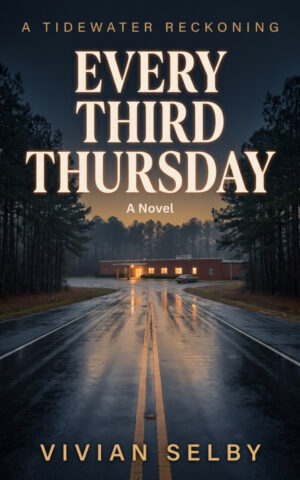
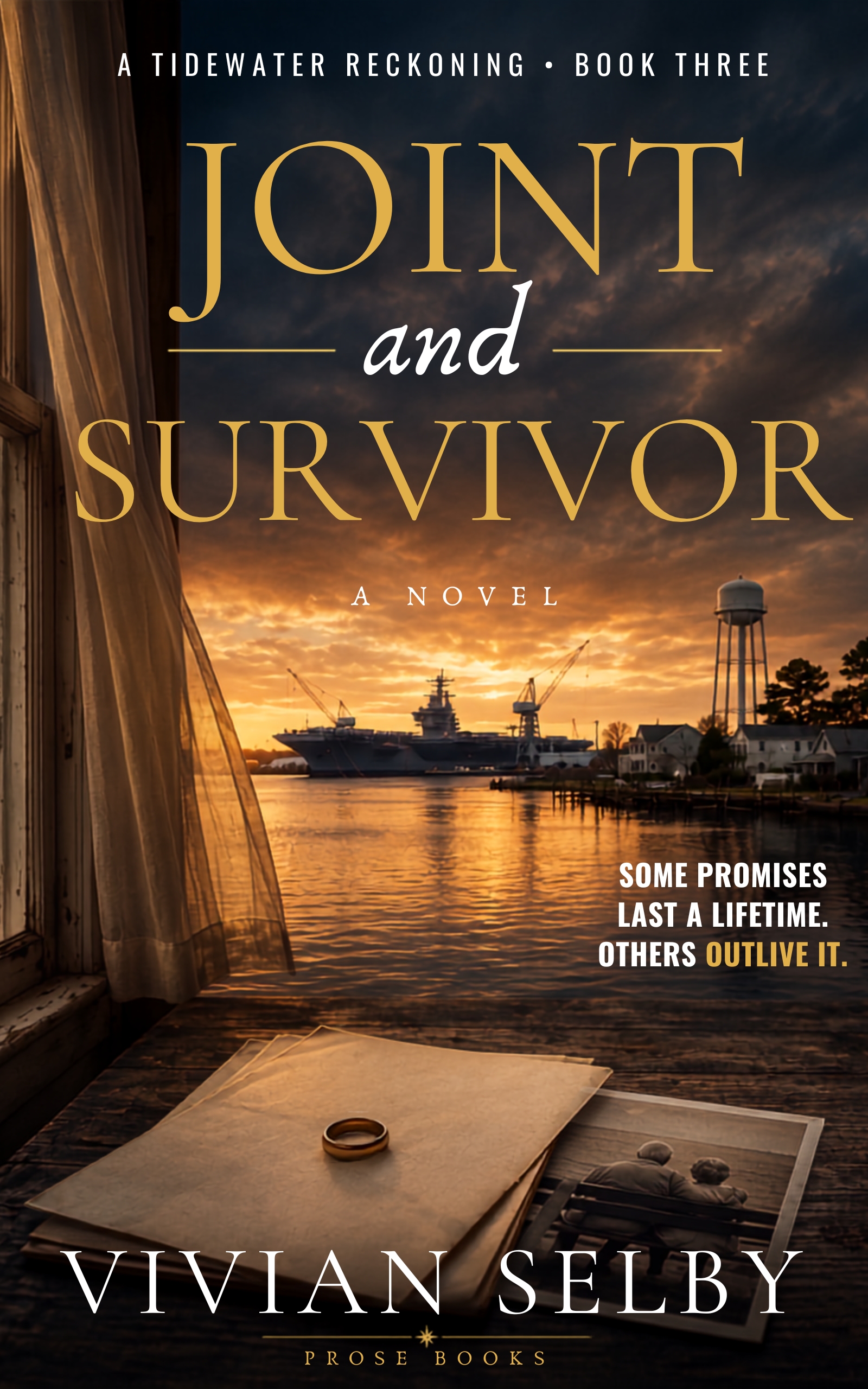
$6.99
Faye Rollins signed a form in a hallway in 2004, in under a minute, with her coat on. Twenty-two years later her friend is widowed, the check keeps coming, and Faye finds out what she gave up. Nobody lied. The law worked. A quiet novel about a long marriage and the difference between suffering for something and answering for it.
Description
Nobody lied to her. Nobody hid anything. The law worked exactly as it was written.
Faye Rollins has carried a hundred and ten people’s supper in her head for forty years. She can tell you, to the tray, how many will come to a welder’s funeral — the church roll, minus the shut-ins, plus the yard, plus however many drive in from off. She is never wrong by more than six. She can tell you where every object in her house is.
She has never once opened the drawer where her husband keeps the paper.
Then her closest friend is widowed — and the friend’s pension check keeps coming.
February 2004, an office at the shipyard
Faye is seventy-four. Twenty-two years ago her husband Ellis sat down in that office and chose the larger monthly amount: the one that stops when he does.
She was in the building that day. She sat out in the hall with her coat on, and somebody carried her the last page, and she signed it in under a minute. It told her, in fourteen plain words, exactly what she was giving up.
That is the thing this novel will not let anyone off with. The form was not tricky. It was five short sentences in plain English and it said precisely what it did. There is no fine print to be outraged about, no clause buried on page nine. The law was written in 1984 by people trying to protect exactly this woman — and it worked, and it got her ninety percent of the way, and it could not get her into the room.
Seven months of finding out
Library computers. A lawyer at three hundred dollars an hour. An eighty-two-year-old benefits man who is not sorry, and does not need to be. A man of about forty behind a desk who explains, patiently and decently, exactly what it costs to buy a survivor benefit back once you have given one away — and who has plainly never thought to go home and look at his own.
And then the harder question, which is what a person does with having found out. When there is nothing at the end of it. When there is nobody to be angry with. When the man in the next room would have answered any question she had ever thought to ask, and she never thought to ask.
Where the damage actually lives
Faye stops herself from asking about the pension early on, and she is clear afterward about what stopped her. Not fear of the answer. Manners.
Fifty-one years of marriage had given her a set of arrangements nobody ever wrote down — he did the outside and the trucks and anything with a bill on it, she did the food and the phone and everybody’s birthday; he went out to the lot at funerals and she stayed in the kitchen. If you had asked her that September afternoon, she would have told you it was the reason they had lasted.
She would have been about half right.
Poquoson
The tidewater country, closer in this time: the shipyard across the water, the Apprentice School, men you can identify as welders at forty feet by how they hold their shoulders. A church hall with the water line from Isabel still on the wall three inches up, painted over twice, and everybody in the room knowing where to look. Wives who did the sitting, for forty-seven years, because that was how it worked — you could know a man for fifty years and never once sit in his house.
For readers who
Want a novel with no villain in it and are willing to find that harder rather than gentler. There is no menace here, no crime, nobody to blame, no violence on the page and effectively no profanity. Every institution behaves correctly. Every person acts reasonably. The outcome is still unbearable, and the author says outright that she could not find a way to make it come out fair — only true.
In this edition
- The complete novel in three acts — Election, Reduction, Remainder — across thirty chapters
- Twelve questions for discussion. The second one asks where else in the book manners do more damage than dishonesty would have.
- A note from the author on the real form that started this book, on why there is no villain in it, and on what the 1984 law can and cannot do
- A first look at the fourth Tidewater Reckoning novel — a woman added to her mother’s checking account so she can pay the bills, who pays them for twelve years, and who owns the whole account outright by the Wednesday afternoon after her mother dies, because of a line on a signature card nobody read in 2015. She does not want it.
The third novel in the Tidewater Reckoning series. Each book stands entirely alone.
Instant digital download.
Please note: This is a work of fiction. Names, characters, businesses, organizations, places, events and incidents are the product of the author’s imagination or are used fictitiously. Newport News Shipbuilding, the Apprentice School and the city of Poquoson are real; no employee, retiree, plan administrator or officer of any real company or institution is depicted here, and all agencies, employers, retirement plans, insurers, officials and proceedings in the novel are fictional. The book refers to federal law on pension survivor benefits and spousal consent; some of it is described accurately and some has been simplified where the story required it, plan terms vary enormously between employers, and characters who speak about the law are speaking in character and are sometimes wrong. Nothing here is legal, financial, tax, insurance or medical advice. A reader facing a real decision of this kind should take the paperwork to somebody qualified — and take their husband or their wife into the room with them.