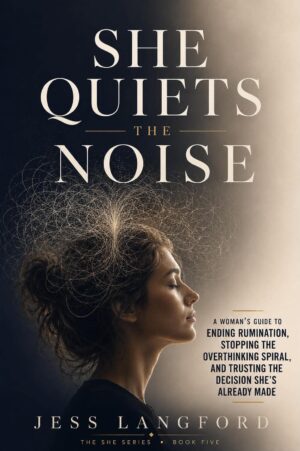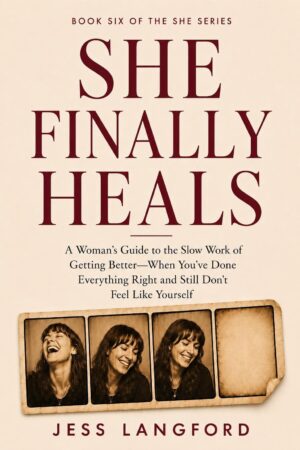
Jess Langford writes for the woman in the middle of it.
Not the one who has come out the other side with a tidy story about what she learned. The one who is still in the part where nothing has resolved yet — where the marriage or the job or the version of herself she had been maintaining has come apart, and the advice on offer is all some variety of be kinder to yourself, which is true and completely useless at two in the morning.
Her books sit with that. They are written in the second person, in short daily pieces, and they are unhurried on purpose: the premise is that rebuilding a life takes about as long as it takes, and that being handed a thirty-day plan is its own small insult.
You are not lost. You are between chapters.
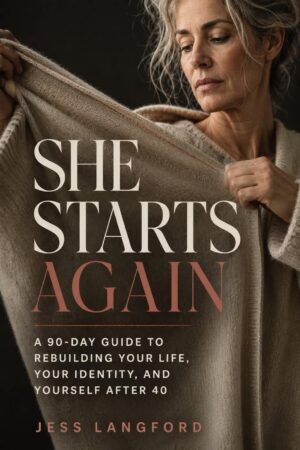
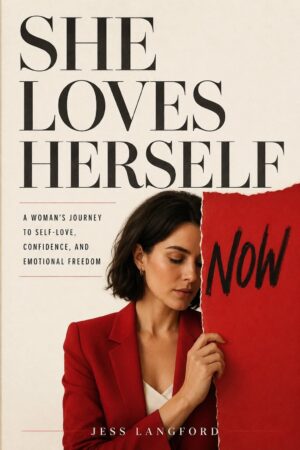
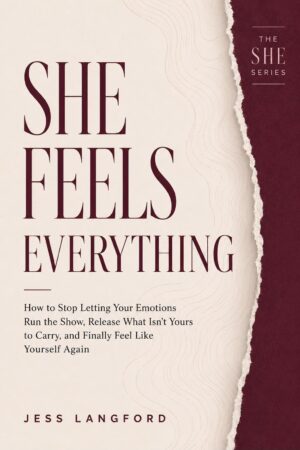
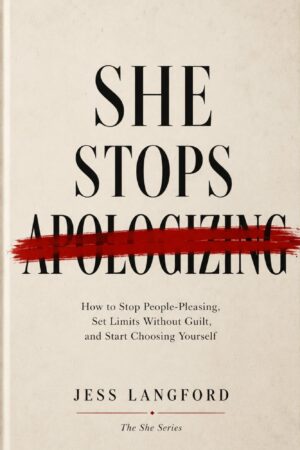
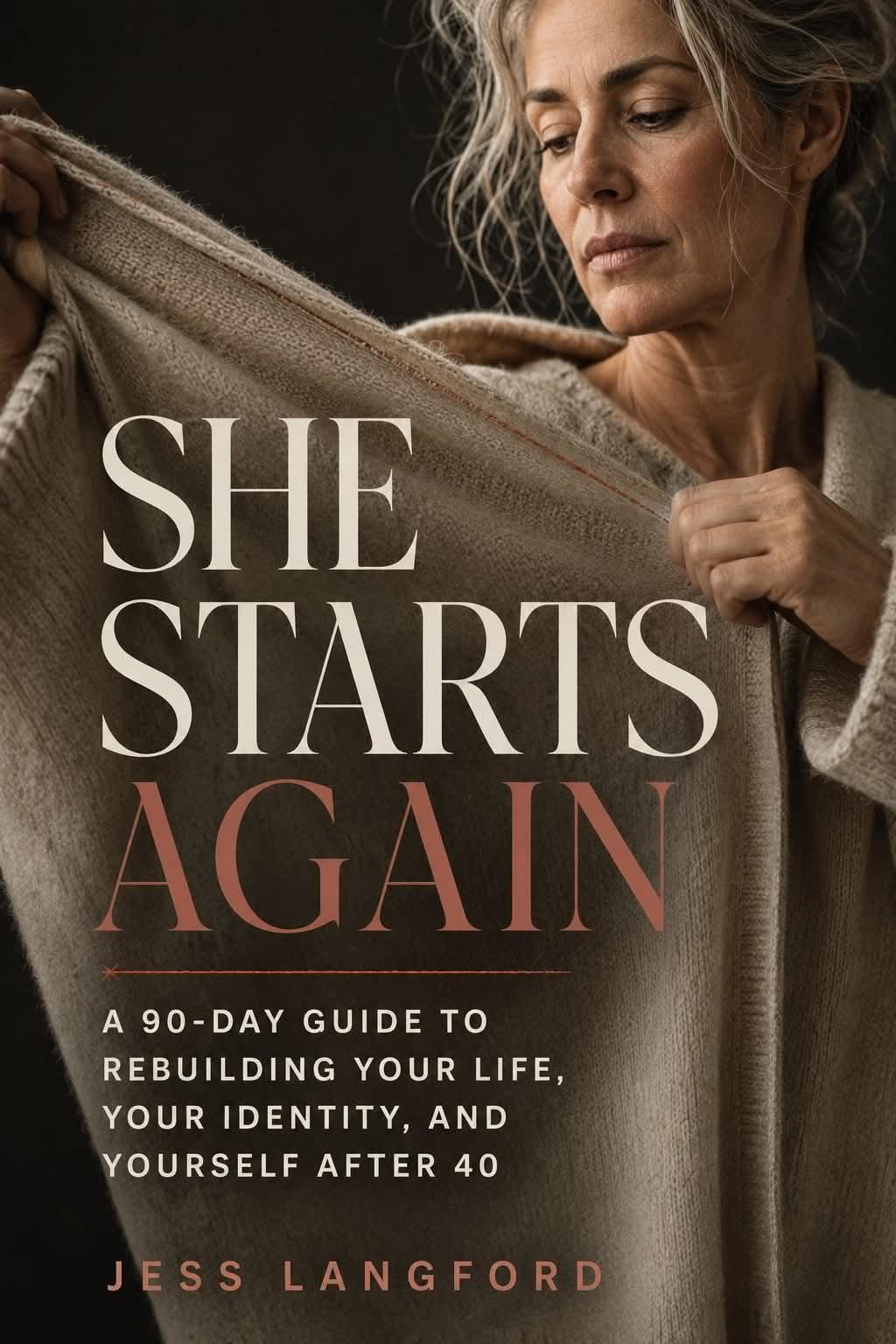
The She Series is six books, each taking one piece of the work — starting again, learning to stop apologising, feeling everything, setting boundaries that hold, quieting the noise, and healing on your own schedule.
They are built as daily entries rather than chapters — She Starts Again runs ninety days — so a reader can take one page on the days when one page is what she has. What they offer is company that does not flinch, and a way of noticing what is changing while it is still too early to call it progress.
Do I have to read them in order?
No. Each book takes one piece of the work and stands on its own. Most readers start with whichever title names the thing they are currently in the middle of.
Is this a thirty-day programme?
No, and deliberately not. The books are unhurried on the premise that rebuilding a life takes about as long as it takes. She Starts Again runs ninety days; the others are read at whatever pace you manage.
Why are they written in the second person?
Because they are meant to sit beside you rather than describe someone else. It also keeps them short and direct — one page at a time, on the days when one page is what you have.
Do I need to be divorced for these to apply?
No. A marriage, a job, or simply the version of yourself you had been maintaining — the books are about the coming apart and what follows, not about one particular cause.
Is this going to tell me to be kinder to myself?
Not as advice. That line is true and completely useless at two in the morning, which is roughly where these books start. What they offer instead is company that does not flinch, and a way of noticing what is actually changing.

Prose Books publishes Samantha Bax, Jess Langford and Alex Carter, Bryn Ledbetter and Vivian Selby. Join the list and you'll hear when a new book lands — usually at a launch price, always before it goes anywhere else.
We process your personal data as stated in our Privacy Policy. You may unsubscribe by clicking the unsubscribe link at the bottom of any of our emails.