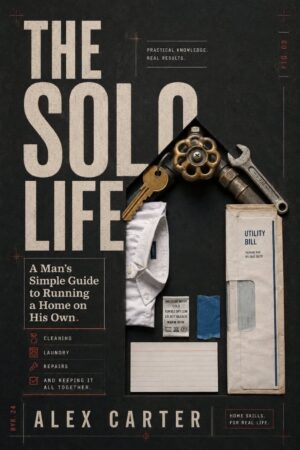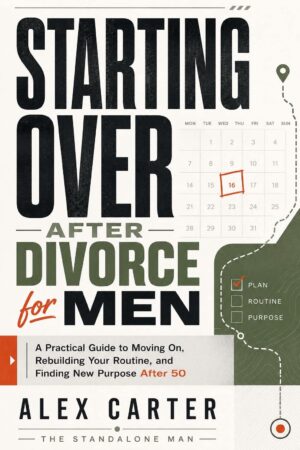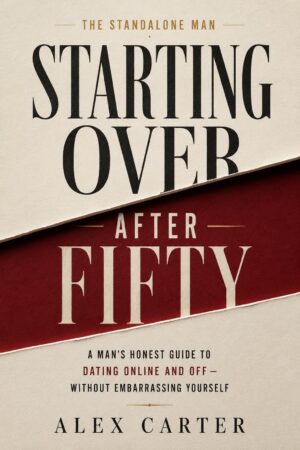
Alex Carter writes for men at the point where the arrangements they built their life around have stopped applying.
A marriage ends. A job ends. The children leave, or the house simply gets quiet in a way it did not used to be. What follows is rarely a crisis — it is more often a long stretch of not knowing what the days are for, and of discovering that nobody is going to come and organise them for you.
Most of what is written for men in that position is either a pep talk or a dating manual. Neither is much help at six on a Tuesday evening when the question is what to have for dinner and whether to call anyone.

Practical books for men who are starting over, and would rather not be told to “put themselves out there.”


The Standalone Man is five books on living alone well — cooking for one without it feeling like a punishment, rebuilding a social life from a standing start, what the first year after a divorce actually asks of you, and what changes after fifty.
The register is direct and practical, with short chapters, because the reader is usually picking the book up and putting it down. They promise no transformation. They assume a competent adult who has simply never had to do this particular thing before.
Is this a dating book?
No. Dating appears where it is unavoidable, but the subject is the rest of it — the weeknights, the cooking, the friendships that went quiet, the shape of a week when nobody else is setting it.
I am not newly divorced. Is any of this for me?
Yes. Divorce is one route into living alone; so is being widowed, or retiring, or the children leaving. The books are about the situation rather than how you arrived at it.
Do I have to read them in order?
No. The five stand alone and overlap only a little. Start with whichever one describes the week you are actually having.
Is there a lot of pep talk?
No. Nothing here promises a transformation and there is no thirty-day plan. The books stick to what to cook, what to say, what to stop doing, and how to build a week that holds its shape.
Why are the chapters so short?
Because the reader is usually picking the book up and putting it down rather than reading it through. Each chapter is meant to be useful on its own, in the ten minutes you actually have.

Prose Books publishes Samantha Bax, Jess Langford and Alex Carter, Bryn Ledbetter and Vivian Selby. Join the list and you'll hear when a new book lands — usually at a launch price, always before it goes anywhere else.
We process your personal data as stated in our Privacy Policy. You may unsubscribe by clicking the unsubscribe link at the bottom of any of our emails.