
ABOUT JESS
She writes for women who are done waiting for permission to start over.
Jess Langford writes about the things women don't always say out loud — the reinvention, the self-doubt, the quiet victories. Her books are built on one belief: the changes that matter most are rarely dramatic. They're quiet, incremental, deeply personal — and the woman making them deserves a guide written in plain language, without clinical distance or easy answers. She writes for the woman who has already tried the plans and the podcasts, and is looking for something that actually meets her where she is right now.
THE SERIES
Five books and counting. One woman, becoming herself again.

The following boooks are the "Flipbook" edition meaning that clicking the book of any of these will open a special page which will be the entire book, front to back that you can read on your phone or tablet...FREE and without obligation to purchase, unless you want that wonderful paperback on your book shelf 🙂

She Starts Again — Book One
For the woman standing at the edge of everything she thought her life would be, looking at what comes next and not quite knowing how to begin. After a relationship, after a painful chapter, or simply the moment the old version of her life stops fitting. Not a list of instructions — the kind of honest company that makes the next step feel possible.
She Loves Herself Now — Book Two
For the woman who got quietly covered over inside a relationship — the one with opinions she stopped voicing, a life she set aside, a sense of herself that grew fainter until she could barely hear it. This is the honest reckoning: releasing the guilt and the grief and the anger, and learning the daily practice of choosing herself. She didn't disappear. She just got quiet — and this is how she gets loud again.

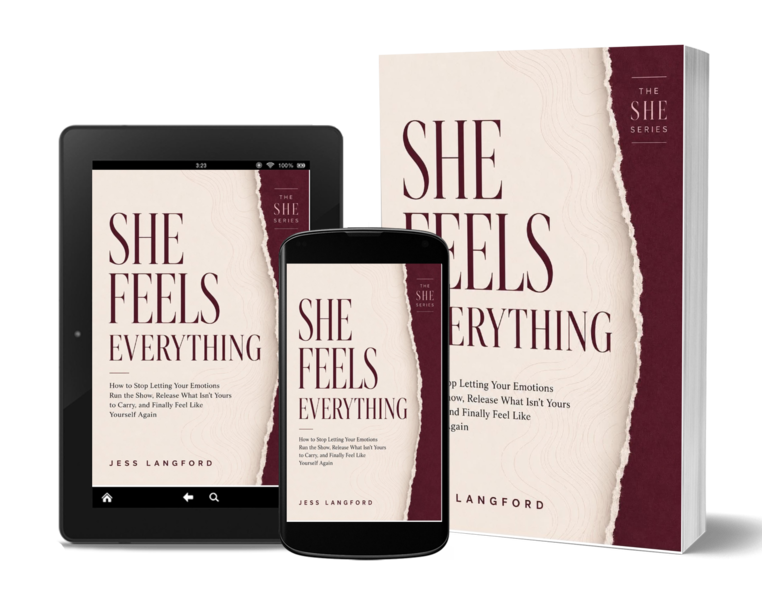
She Feels Everything — Book Three
For the woman who feels everything — who reads a room in seconds, cries at the commercial, carries other people's moods home like they're her own, and has been told her whole life that she's "too much." She isn't too much. She's tuned differently, and no one ever taught her how to live inside a nervous system this sensitive without drowning in it. This is where she learns to feel deeply without losing herself in it.
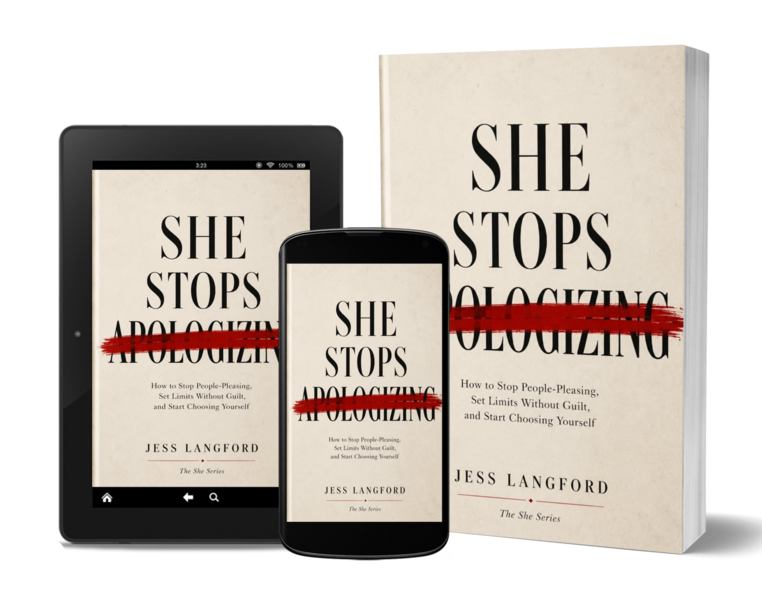
She Stops Apologizing — Book Four
For the woman who says sorry before she's done anything wrong — who reads the room before she speaks, manages everyone's moods before they've said a word, and calls it kindness. It isn't kindness. It's a reflex, learned early, and it's costing her more than she knows. This is how she learns to say no and mean it — even with the people who know her best.
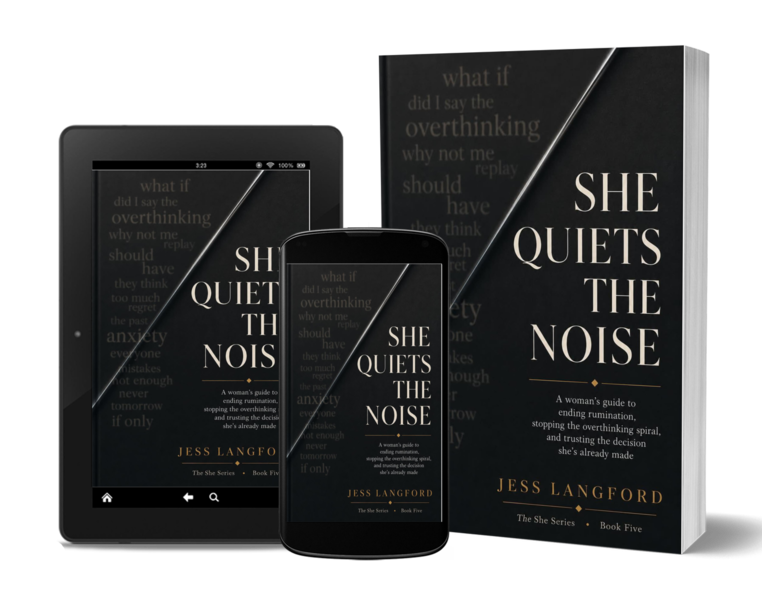
She Quiets the Noise — Book Five
For the woman who's awake at 2:47 in the morning, rehearsing a conversation with someone who's fast asleep — who chose the flooring in April and has un-chosen it eleven times since. She isn't thinking too much. She's thinking the same thing too many times, and that's a different problem with a different fix. Half of this book is tools.
